The driver
Does the lap. Right now.
- Eyes on the next cue.
- Hands following what they've already learned.
- Reacts in milliseconds, no debate.
- Lives entirely inside this corner.

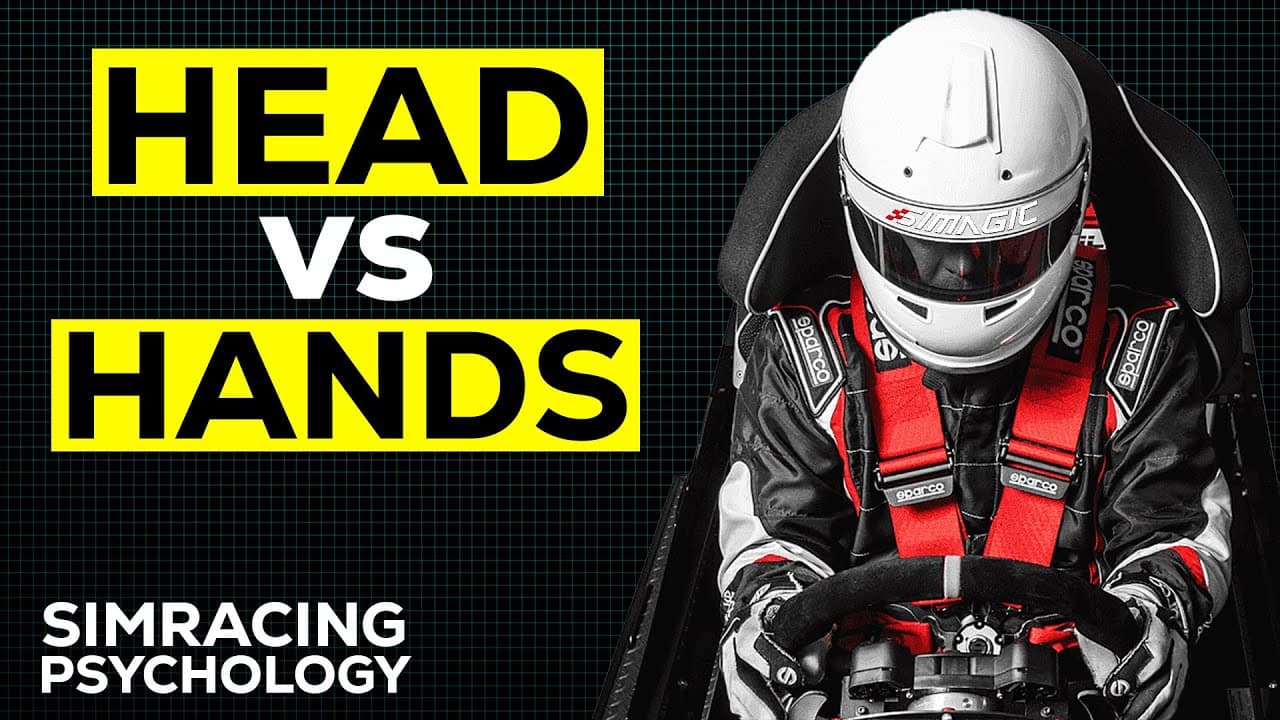
Simracing Psychology
If you've ever nailed a lap in practice and then completely bottled it in the race, this article is about the reason why. It isn't your setup. It isn't the track. It's a documented sports-psychology pattern called the reinvestment trap, and once you know what you're looking at, you can train your way out of it.
Start here
You've been smooth all race. The car feels planted. The rhythm is there. Laps dropped right where you wanted them. Comfortable.
Then something shifts. Maybe you realise you're leading. Maybe your rival's name pops up half a second behind you on the timing screen. Maybe somebody posts a personal best behind you and you feel them closing.
Whatever it is, your brain switches modes. Your grip on the wheel tightens. Every braking point gets second-guessed. A voice in your head goes, “don't mess this up.”
That's the exact moment you mess it up.
The trigger moments
Different cause every time. Same response every time.
The science bit
It explains why golfers miss putts they'd sink in their sleep at the driving range, why footballers slice penalties they'd normally bury, and why sim racers throw away laps they'd been nailing all session.
The theory says that when you're under stress, you start consciously controlling skills that should be automatic. You reinvest your mental resources into movements you'd already mastered. The brain grabs the wheel back from your trained autopilot and tries to drive the car itself.
The problem is that conscious control is slow and clunky. It's the difference between letting your phone run normally and deciding to manually manage every app, schedule every CPU cycle, and check every notification before allowing it through. Nothing works as fast.
In driving terms, you oversteer. You overbrake. You overthink. The car becomes harder to drive even though nothing about the car has actually changed.
Same driver, two modes
The good news
Think about your own muscle memory. A perfect downshift. Hitting the apex at a corner you know cold. Balancing the throttle through a long sweeper without any conscious thought. You're not telling your hands and feet to do those things step by step. It's automatic, built up over hundreds or thousands of laps.
That autopilot is the version of you that's fast. Practice builds it. Race pressure tries to take it away.
The fix isn't to learn more technique. It's to stop yanking the controls back from the version of yourself you already trained.
What the autopilot already knows
Every one of those is muscle memory. None of them want the coach back in the loop.
Try this now
You don't need a rig for this one. Where you're sitting, ten seconds.
Quick experiment, do it now
You can feel it, right? A tiny stutter in the flow. That's what happens when your attention is split. Same effect, much louder, in a real race.
That little flicker you felt is what happens when your attention is split. In a race it's not numbers and corners pulling against each other. It's keep it tidy versus don't let them past versus what if I crash. Same mechanism, same stutter, much higher cost.
The two voices
Under pressure, your brain tries to be both the driver and the coach at the same time. It cannot do both at full speed. Unless you're Max Verstappen.
The driver
The coach
The fix
None of these are dramatic. All of them work. Built up over a few weeks of consistent reps, they quietly stop the bottling pattern in its tracks.
Train a handful of short, simple reminders that pull your focus outside the car. They sit in your head instead of the inner coach. The point isn't to think more, it's to give your brain a single anchor it can hold onto.
In practice
'Brakes smooth.' 'Eyes up.' 'Late apex.' 'Roll the wheel.' Two words, said once on entry, then dropped.
Before you even load into the race server, rehearse the pressure moment. Picture yourself leading with two laps to go. Feel the nerves. Imagine yourself staying relaxed and hitting the marks. If you've already played the scene in your head, the real version doesn't shock you.
In practice
Shadow boxing in practice works too. Pretend to dive down the inside of a car that isn't there. By the time someone real shows up at Daytona, first-gear, grass on the inside, you've been there.
Run practice stints where you deliberately do not think about technique. No corner notes, no internal coaching, no delta watching. Just drive. This reinforces to your nervous system that your body already knows what to do without step-by-step instructions.
In practice
I turn the delta bar off entirely. I do not think about lap time during the lap. I focus on the corner I'm in, rotate as fast as the car will, get on the power as early as it'll take, and trust the lap to come out at the end.
Put yourself in awkward, stressful spots on purpose. Mid-pack starts. Sessions with more aggressive opponents. Small splits where everyone knows everyone. The more reps you've banked under pressure, the less likely your brain is to hit the panic switch in a real race.
In practice
Voice-chat practice races with the Discord crowd are gold for this. Pressure, chatter, distraction, all in a low-stakes setting where bottling it costs you nothing.
Trust your training is the one I lean on hardest. Combined with the change I wrote about in the Quiet Eye article, turning off the delta bar and letting the eyes lead, the two sit together naturally. Stop coaching yourself, stop watching the timing screen, drive the corner you're in.
The closing line
Next time the voice says “don't mess this up,” treat it like a back-seat driver. Politely, firmly, tell it to sit in the passenger seat. Relax. Have a nap. The driver's already done the work.
Trust the version of you that you trained in practice. That driver knows the brake points. That driver knows the apex. That driver knows what to do when the rear steps. The coach can come back after the race, in the replay, with a notebook. Not now.
Your brain can be your biggest upgrade or your biggest limiter. The choice is in how you train it.
Swap the coach for a cue
Cues live outside the car. The car becomes drivable again.
A note on Simracing Psychology
The reinvestment trap is one pattern. Quiet Eye is another. The leg-shake response. The arrival fallacy that quietly costs people years. All different mechanisms, all very trainable, all in the same place.
Simracing Psychology is where I keep all of this, videos and articles both.
Tell the back-seat driver to sit in the passenger seat. The driver knows what to do.
Your brain can be your biggest upgrade or your biggest limiter. The choice is in how you train it.
Keep going
Everything below is something I've made, used, or written. Affiliate links are marked the same way they are everywhere else on the site.
Related guides
The Quiet Eye in Sim Racing
Pairs naturally with this one. Where pros actually look in the second before a corner.
ReadWhy your leg shakes
The somatic version of the same problem. Pressure showing up in the body, and how to channel it.
ReadThe Lie Every Sim Racer Believes
The arrival fallacy, the iRating chase, and why the satisfaction you're waiting for never quite arrives.
ReadGear that matters here

Pro setups plus the GO Fast telemetry app. Race engineer in your pocket.

Based out of Drift Games HQ in Ireland. Consultation, planning, building and setup of advanced simracing rigs for private and commercial clients.

The full SIMAGIC bundle deal. Direct-drive base, wheel and pedals at the lowest price of the year.

From the GT1 EVO to motion-ready P1-X frames, Sim-Lab kit handles whatever a direct-drive base throws at it.
Watch the video version
All videos on YouTubeThe Reinvestment Trap, the silent race killer
The Simracing Psychology video this article was built from.
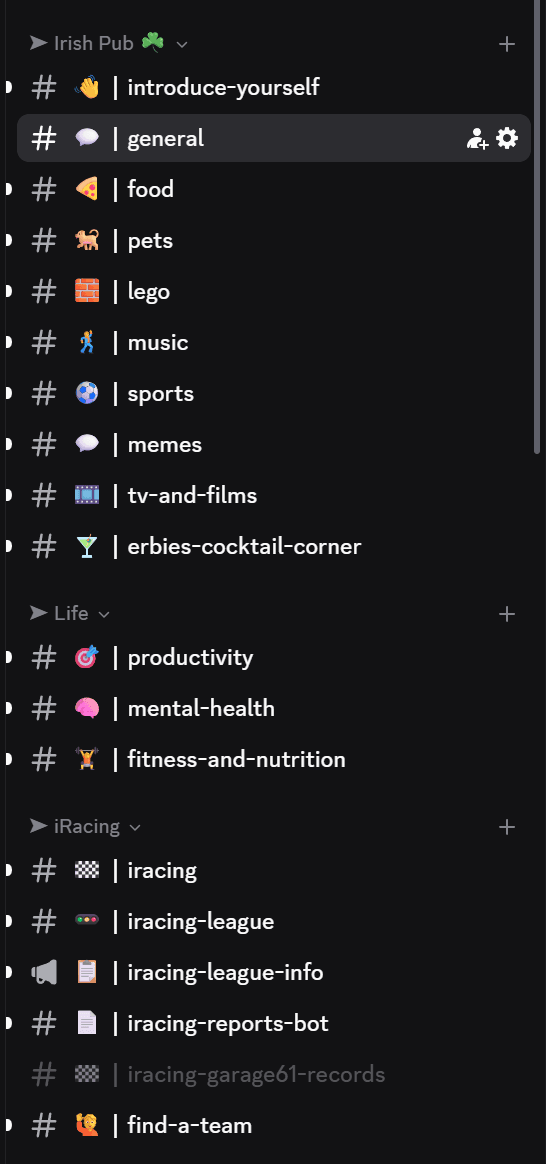
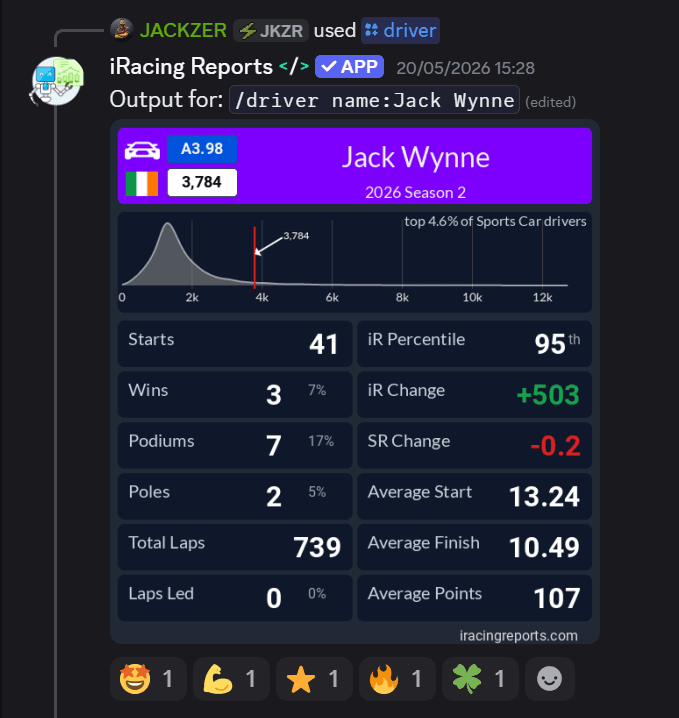
The Irish Pub would love to have you, we've league races on Thursdays and the craic is mighty. Can't wait to see you there.
Channel partners